The renovation of a landmark Greenwich Village townhouse
The renovation of 111 Bedford Street in New York City was, for us at Axis Mundi Design, an exercise in restraint and quiet invention—shaped fundamentally by its location within a designated landmark district in Greenwich Village.
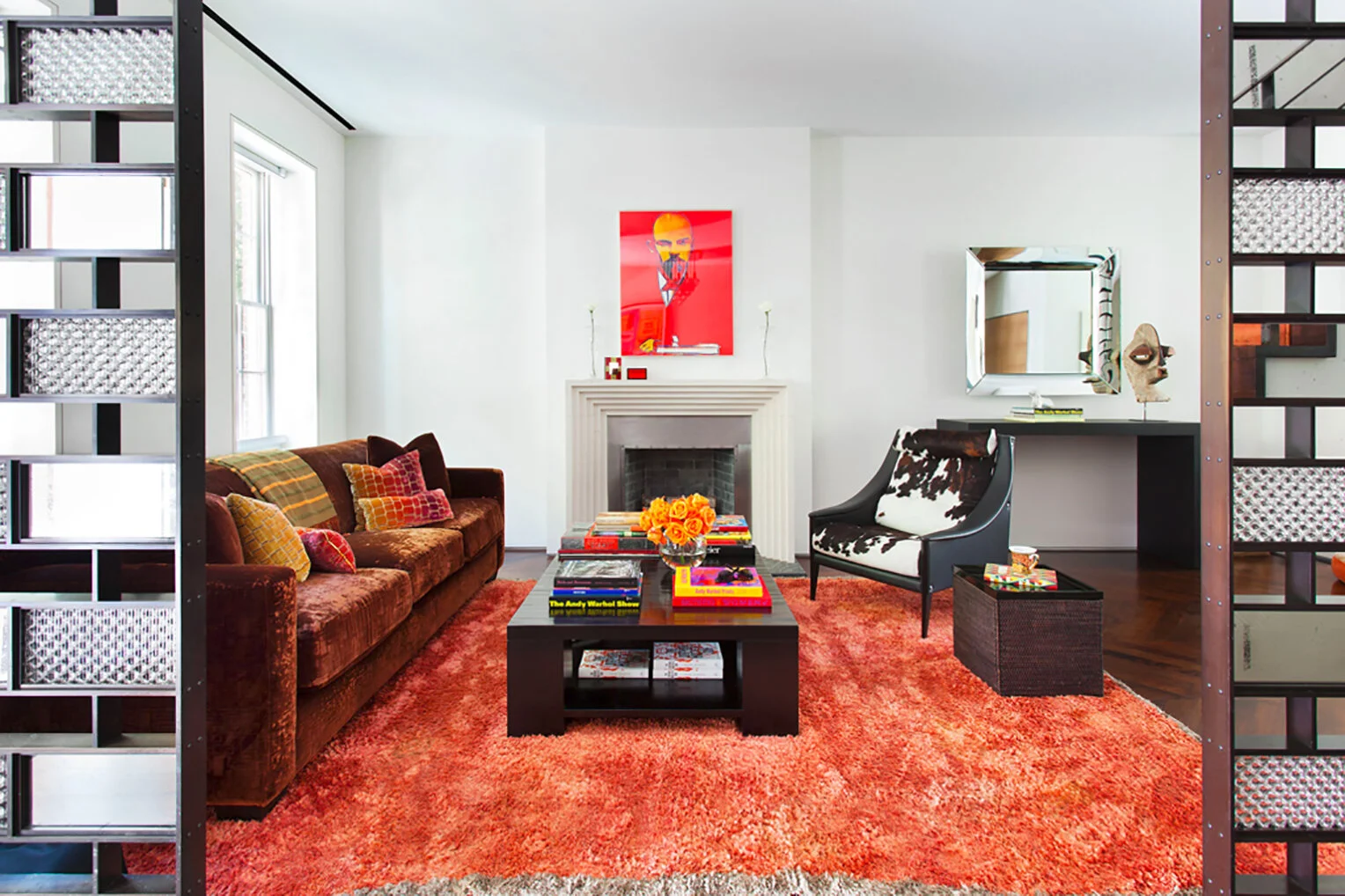
Here, the exterior is not ours to reinterpret. The façade, proportions, and rhythm of the street must remain intact. The project, therefore, became an interior transformation—an architectural dialogue between preservation and contemporary life.
We approached the townhouse as a complete reworking from within. Stripped to its structural core, it allowed us to rethink the house not as a series of isolated floors, but as a continuous vertical experience. Still, we preserved its essential hierarchy—garden level, parlor floor, and upper stories—recognizing these as intrinsic to the building’s identity.
Our goal was to dissolve separation and create flow. Circulation became fluid, and the house began to unfold into a cohesive spatial sequence rather than a series of stacked compartments. The parlor floor remained the anchor. Historically, the most formal level, we reinforced its centrality by restoring fireplaces and clarifying axial views from front to rear. The intervention was subtle—refining proportion and simplifying detail—so that the space feels grounded in its history while fully inhabitable today.
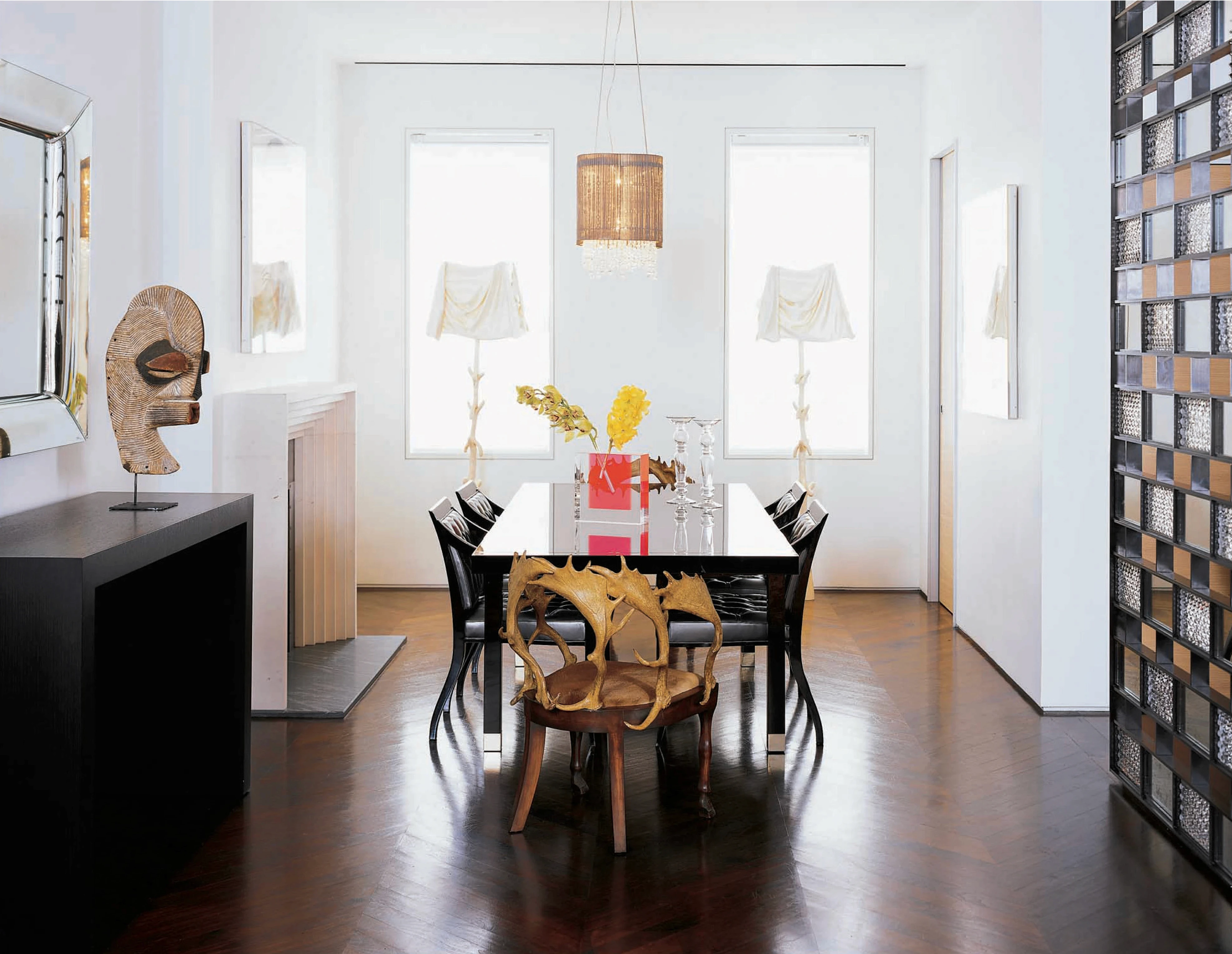
Materiality guided the atmosphere. We worked with natural, responsibly sourced materials—wood, stone, and subdued finishes that carry texture and depth. The intention was continuity rather than contrast. The interior should feel discovered, not imposed; calm, tactile, and enduring.
At the same time, the house was entirely rebuilt for contemporary performance. Mechanical, electrical, and smart-home systems were fully integrated but concealed. Climate, lighting, and security operate seamlessly in the background. In a landmark district, this invisibility is essential—modern life is supported without disrupting historic presence.
A defining intervention was the introduction of a large skylight above the main staircase. This single gesture transformed the vertical core into a source of light, allowing daylight to flood down through the center of the house. In a structure constrained by party walls, this was critical. The stairs became more than circulation—it became a luminous spine, organizing the experience of the home and connecting each level through light.
As the house rises, it becomes more private. Bedrooms are conceived as retreats—quieter, more introspective, yet still part of the larger whole. The primary suite occupies an entire floor, creating a sense of autonomy. A small kitchenette was introduced, reflecting contemporary patterns of living and offering moments of independence within the home.
Light, throughout, was treated as a material. Beyond the skylight, we maximized its presence through proportion and surface, while artificial lighting extends its qualities into the evening. The garden level, in contrast, opens outward. The rear garden becomes an extension of the interior, dissolving boundaries and offering a rare sense of openness within the density of the Village.
Working within a landmark district sharpened every decision. The exterior remains continuous with the street, while the interior evolves quietly. The result is a layered architecture—one that preserves its past while accommodating the present.
For us, 111 Bedford Street is not about transformation as spectacle, but as continuity. It is a house that lives fully in its time, without forgetting where it began.